This article explores what happens when your hot tub undergoes maintenance? From thorough cleaning to essential water chemistry adjustments, our guide demystifies the maintenance routine, offering insights into the intricate care your hot tub deserves.
Dive into the world of hot tub maintenance and discover the key steps that keep your relaxation haven in top-notch condition. From meticulous filter checks for crystal-clear water to pH balancing, shock treatments, and a thorough deep clean, this article unveils the secrets behind ensuring a clean, safe, and enjoyable hot tub experience that stands the test of time.
The Filters Are Checked
Having sparkling clear water in your hot tub is vital for the ultimate soaking experience. At the heart of achieving this is a properly working filter. So, during routine maintenance of your hot tub, the first task of specialists is to inspect the filters. Hot tub filters can over time become blocked with dirt, debris and tiny particles. If left unchecked, these congested filters could impact the hot tub's efficiency in maintaining the water's cleanliness. Throughout a maintenance service, experts frequently take out the filters, carefully clean them using a specific detergent, rinse them thoroughly, and leave them to air dry.
During a maintenance check, professionals typically remove the filters. They apply a special cleaning agent to rinse off the dirt thoroughly, followed by allowing them to dry. However, on occasion, filters might be excessively worn out or damaged and may necessitate replacement. Professional experts assess the state of these filters, and based on their judgement, make informed recommendations. In cases where replacement filters are necessary, they will present a range of choices and help you make an informed decision. By executing this step, you can rest assured that your hot tub water stays clean, clear, and safe for your enjoyment.

The pH Levels Are Balanced
One of the crucial aspects of maintaining hot tubs is the ongoing management and balance of their pH levels. Consistent monitoring and quick alteration directly influence the capability of its sanitising abilities, specifically chlorine and bromine, in annihilating detrimental bacteria in the water.
The recommended pH level for a hot tub usually falls within the range of 7.2 to 7.6. During a routine hot tub service, professionals diligently achieve these pH levels, alongside assessing the water's total alkalinity and calcium hardness levels.
Each of these factors plays a crucial role in determining the overall water balance of your hot tub. It's essential to maintain the correct water balance as this can ward off multiple issues, such as potential corrosion and scale build-up.
Keep pH in the range specified by the spa and chemical supplier and check sanitiser separately. Correct pH supports treatment but does not, by itself, prevent bacterial growth.
By managing pH levels correctly, you are enhancing the water balance in the hot tub. This is crucial to avoid rust and scale build-ups that can damage the tub. Thus, maintaining a pH level between 7.2 and 7.6 makes the hot tub's water less likely to upset your skin and eyes, enhancing your overall enjoyment and well-being.
Shock Treatment To Remove Bacteria
Shock treatment is a vital procedure that's performed during hot tub maintenance. This process involves the addition of a sizeable volume of sanitising chemicals into the hot tub's water. The main reason for carrying out this treatment is to effectively eliminate any bacteria, as well as other potentially harmful organic compounds, that may be present in the water. These substances could lead to a variety of health-related issues if not properly addressed.
Additionally, maintaining a clean and safe water environment isn't merely a matter of personal hygiene. It also plays a vital role in enhancing the overall lifespan of your hot tub. Organic matter can accumulate over time, and without this essential shock treatment, these substances could potentially damage the tub's components, leading to malfunctions or the need for costly repairs. Therefore, shock treatment not only ensures a safe soaking experience but also acts as a preventative measure, saving you from potential future costs.
Scales And Stains Are Removed
Hot tub maintenance is crucial to keeping it in good condition and it includes the vital process of removing scales and stains. These residues typically originate from high levels of calcium and can deteriorate not only the aesthetic appeal of your hot tub but its functionality as well.
Therefore, trained experts regularly employ specialist cleaning products formulated to effectively dissolve and eliminate these undesirable substances.
By keeping your hot tub clear of these impurities, its lifespan can be prolonged; securing your investment for longer and minimising future maintenance hassles. Taking care of your hot tub in this way could result in substantial savings of both time and money in the long term.
The Tub Is Deep Cleaned And Circulated
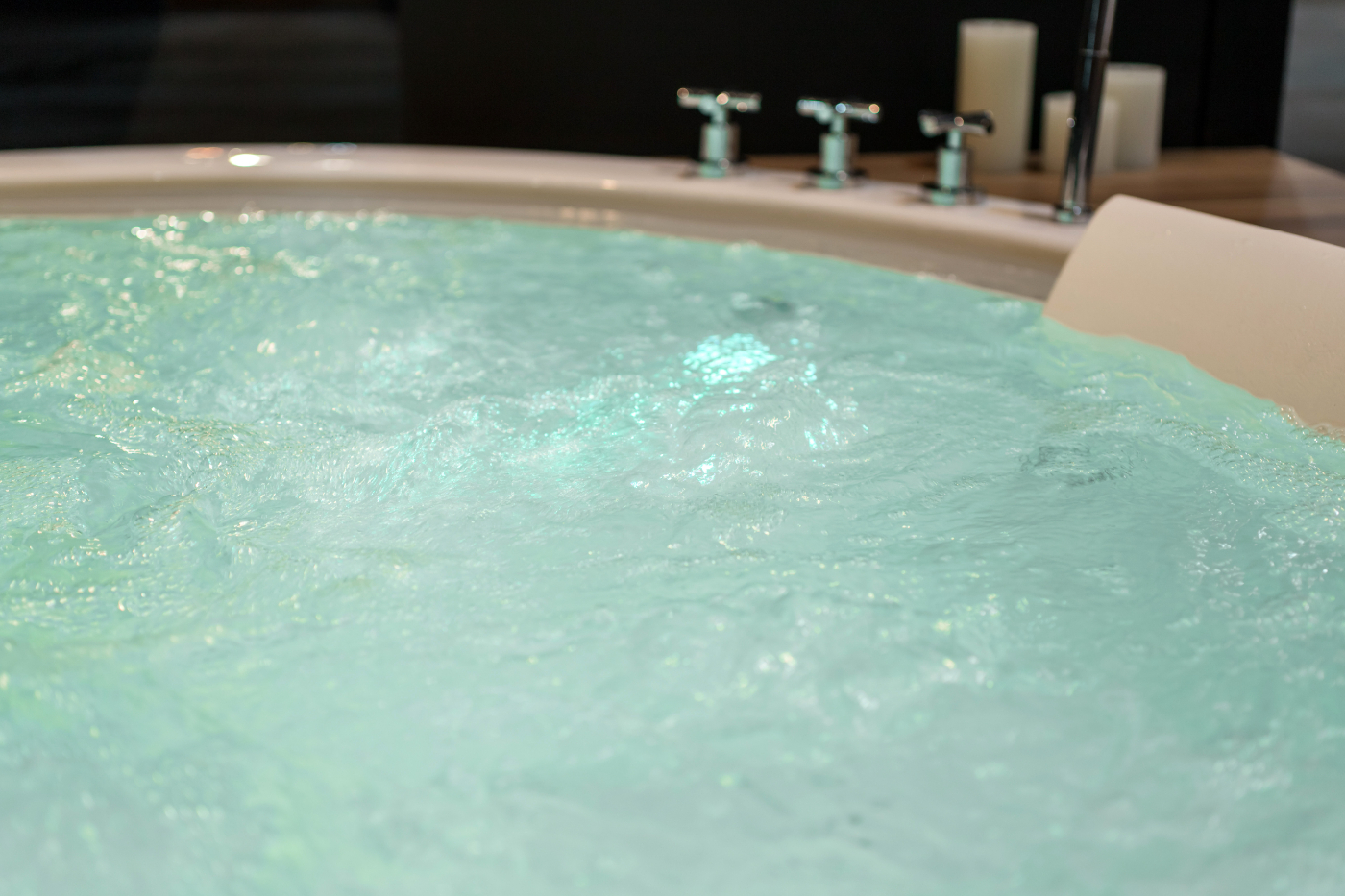
The final phase in maintaining your hot tub is a comprehensive deep clean and water circulation process. This process, executed by an experienced maintenance team, involves a thorough scrubbing of every surface and corner of your hot tub. This meticulous approach is critical in eliminating all dirt or residual matter, preventing potential issues that may occur if left untreated. To ensure a rigorous clean-up process, the maintenance team first drains out the existing water. They then scrub and clean all parts of the hot tub, from top to bottom and inside out. This leaves no stone unturned and ensures all dirt and harmful substances are eliminated.
Once the hot tub is spotless, it's then refilled with fresh water. The maintenance team then run the jets and other components, verifying the proper functioning of every element of your hot tub. This also ensures that the water flows smoothly, each part working in sync with the others, creating a harmonious balance within your hot tub.
Water circulation in a hot tub is fundamental. It involves the continuous movement of the tub's water through a filtration system; this system eliminates any impurities, keeping the water clean and safe. Regular circulation also plays a key role in maintaining a consistent and even water temperature throughout the hot tub, preventing any hot or cold spots. This is purposely designed to deliver a comfortable and enjoyable hot tub experience. Maintaining good water circulation in a hot tub is essential, ensuring cleanliness, proper heat distribution, and overall, enriching your hot tub experience.
Paying attention to routine maintenance significantly contributes towards extending the lifespan and enhancing the performance of your hot tub. A well-maintained hot tub offers the best guarantee of a calming, worry-free soaking experience. Remember, maintenance is not a hard task, but it is a necessary one, that ensures you continue to enjoy the unmatched comfort and relaxation that only a well-cared-for hot tub can provide.
Prepare for a productive service visit
Tell the engineer the make, model, error messages, last water change and any recent repairs. Leave the equipment compartment accessible and explain restricted access. Confirm whether the booking covers inspection, a drain-and-clean, pipework treatment or a full service: these involve different tasks. Do not drain the spa beforehand unless asked, because some faults are easier to observe while it operates.
Photographs of the control panel and a record of water tests can help with diagnosis. Mention intermittent leaks and unusual noises even if they disappear before the appointment. If the spa is unsafe to operate, explain that when booking rather than switching it on to demonstrate the fault.
Water readings and return-to-use checks
The CDC hot tub guidance, updated in May 2025, gives reference values of at least 3ppm chlorine, 4 to 8ppm bromine and pH 7.0 to 7.8. These health guidance figures do not replace a narrower operating range specified by your spa and chemical supplier.
pH adjustment alone does not disinfect water. After cleaning, check sanitiser, water balance, circulation and relevant fault codes. Ask what readings must be reached before bathing again, particularly after shock treatment or a refill. There is no single waiting time for every treatment: the product label and measured readings decide.
The handover and checks between appointments
Ask for a record of observations, work completed and parts needing attention. Useful details include filter condition, visible leaks, pump operation and water readings. A routine service is not automatically an electrical installation inspection; confirm what electrical checks are included and whether further work needs an electrician.
- Record the next cartridge clean, water review and service dates.
- Keep before-use water testing in your routine.
- Report renewed leaks, flow warnings or unusual pump sounds.
- Check the cover fit and water level between visits.
A refill needs time to heat and circulate. A warm display reading does not prove every return-to-use check has passed. Confirm the process before the engineer leaves.
At The Hot Tub Engineer, I provide expert-level services for hot tubs, swim spas, and pools in and around Maidstone, Kent. I can carry out yearly servicing appointments, as well as cleaning sessions, general maintenance, installations, and more.