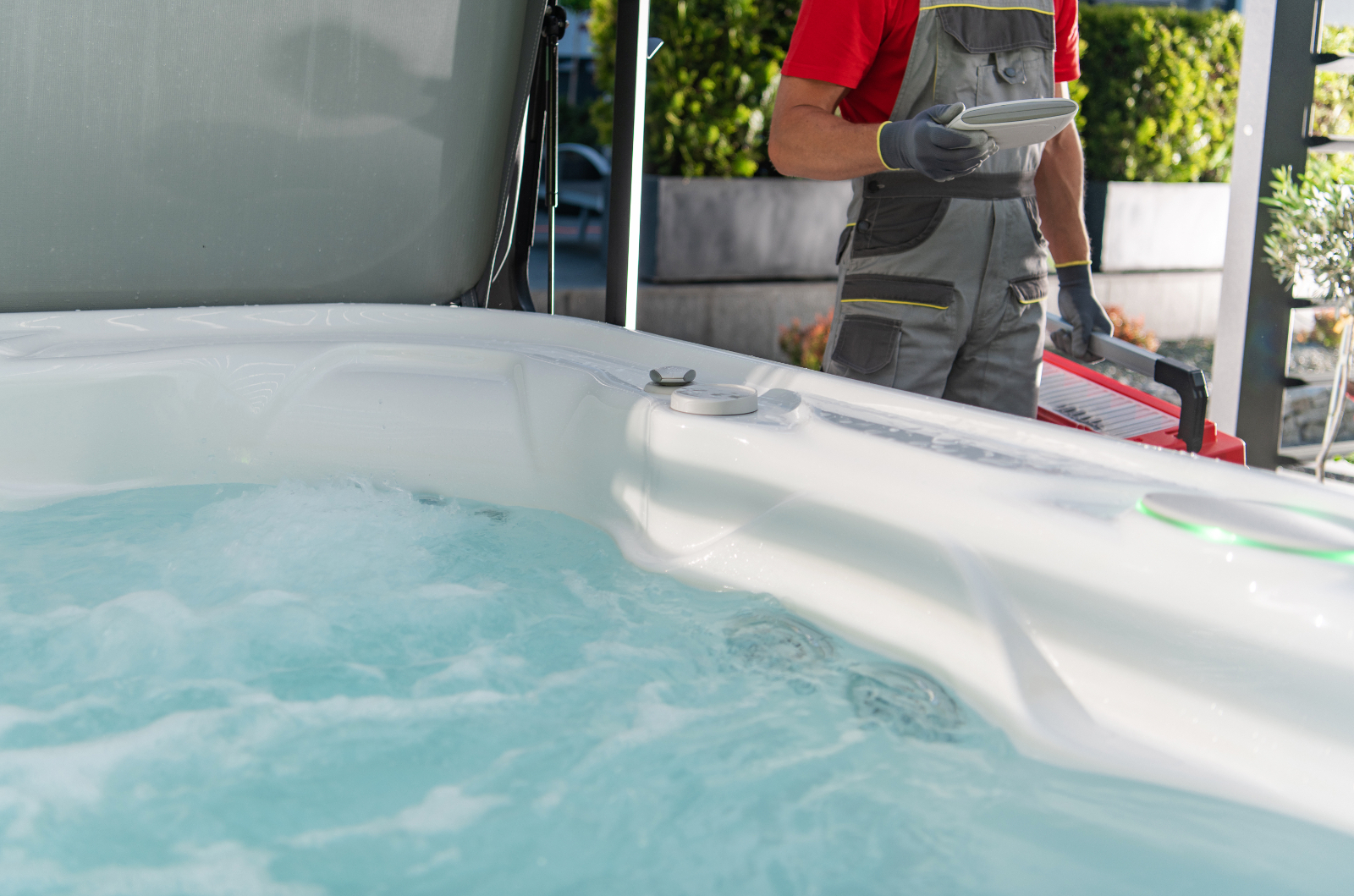
Are hot tubs difficult to move? Learn about the necessary equipment, expert tips, and step-by-step instructions to make your hot tub relocation a breeze.
Have It Professionally Dismantled
A rigid hot tub normally moves as an intact shell and frame. A specialist should assess the route, condition and approved handling points.
A shell cannot simply be dismantled to fit a narrow opening. Restricted access may require another route or a planned specialist lift.
While the idea of dismantling your hot tub may seem enticing, it's important to get professional help - this ensures safety, prevents potential damages, and provides a smooth relocation experience. By keeping this in mind, you can continue to enjoy your hot tub with peace of mind, confident that it's been transported safely and efficiently.

Hot Tubs Are Easier To Move With Multiple People
Moving a hot tub needs suitable equipment and a risk-assessed method. Team size follows that assessment; four helpers do not automatically make a lift safe.
This includes appropriately disconnecting the tub and understanding the hot tub's dimensions for effective coordination. Before starting the relocation process, it's critical to ensure that every team member understands their role.
Lifting heavy objects without proper training or support can lead to injuries; therefore, it's vital to equip every person with the necessary knowledge before beginning the move. Additionally, when forming your team, it's essential to set clear expectations in terms of effort level and time requirement.
To safeguard the hot tub from potential damage, it's best to cover it and make sure all necessary tools and equipment are available. Another significant factor when preparing to move a hot tub is to disconnect and drain it, which can substantially reduce its weight.
Disconnect And Drain The Hot Tub
If you're planning on moving a hot tub, it's essential to prepare correctly. First and foremost, the tub needs to be disconnected and drained; this is because emptying it means that the weight is reduced, making it easier to move and transport. Just like unplugging any electrical device, you need to turn off the hot tub - start by switching off its power supply to prevent any issues like getting an electrical shock.
Once you've switched it off, the draining process begins; depending on the design of your hot tub, it may come with specific drainage outlets - but if not, a simple garden hose should do the trick. Draining a hot tub can take several hours, and where you drain the water is just as important as how you do it.
Make sure that the water being drained doesn't harm your property in any way - so choose your draining location thoughtfully and carefully. Remember, once the tub is empty, it's an opportune time to give it a good clean as well; this ensures that it stays in excellent condition before it's ready to be installed at its new location. By following these steps, you can easily manage the stress of moving a hot tub and ensure a smooth transition.
Access matters as much as the empty weight
Start with the model plate, manual and dry weight, then measure the route at both addresses. Gate openings, tight turns, low eaves, steps and gradients can dictate the method even for a compact tub. Include room for handling equipment and the people controlling it. Difficult routes may need a site survey.
Most rigid spas move as an intact shell and frame. Removing pumps does not make the shell smaller, and lifting by jets or plumbing risks damage. Only remove components or stand the unit on a particular side where the manufacturer and relocation specialist approve it.
Adding helpers is not a lifting plan
In HSE 2024/25 employer-reported non-fatal injury figures, handling, lifting or carrying accounted for 17%, and same-level slips, trips or falls for 30%. These are workplace-wide figures, not hot tub moving accident rates.
HSE manual handling guidance sets no universal safe weight limit. Four people do not automatically make a lift safe. Shape, centre of gravity, footing and grips matter, as do the capacity and suitability of handling equipment. Ask how the tub will be supported and controlled at each awkward point.
Decide whether the move is practical
An access survey should settle whether ground transport is feasible or specialist lifting is needed. For a crane, the contractor must assess its position, reach, ground conditions and overhead obstructions. A dry weight is only one input: do not choose equipment from that number alone.
- Confirm who isolates and reconnects a hardwired supply.
- Agree draining, residual-water removal and weather protection.
- Check insurance for the unit, property and transport.
- Prepare the destination base and service access before collection.
Ask whether the quote includes recommissioning. Delivery to a new base is not the same as a leak-checked, filled and balanced spa that is ready to use.

Make Sure To Have A Clear Route
Moving a hot tub safely and efficiently requires careful planning, one key aspect of this is having a clearly defined path. This not only helps to avoid unexpected collisions but also reduces the probability of damaging your hot tub during the move.
By accurately checking the dimensions of your hot tub you can lay a path of how to move it - this should include checking both horizontal and vertical passageways to avoid any issues with sizes.
It's advised that any blockages or furniture should be removed so that there's enough room for the hot tub - and its carriers - to easily move through.
It's important to be aware of any soft or unsupportive ground that could cause the tub or any equipment to sink in; therefore, it's advised that you use a path with a hard and sturdy surface. These steps can be essential to not only ensure a smooth moving process but also to safeguard your hot tub's condition, value and functionality.
How Much Do Hot Tubs Generally Weigh?
Moving a hot tub is by no means easy; it requires a detailed preparation process, ensuring the destination has the right space, and figuring out the mechanics of moving the tub itself. Hot tubs can range substantially in weight, tipping the scales anywhere between 150kg and 517kg, based on the specific model. Moving a hot tub is a daunting task that demands meticulous planning and expertise.
Hot tubs come in a variety of sizes and weights, which are influenced by factors such as their model, size, and the materials used in their construction. A small empty hot tub can weigh around 90-135 Kilograms, while a larger one may even weigh up to 450 kilograms when empty; these weights can dramatically increase when the hot tub is filled with water.
Water adds approximately 1kg per litre to the dry weight of the tub and accessories. Use the actual model capacity and dry weight to assess loads, and drain before relocation.
This is why it's recommended to use professional moving services to ensure that your hot tub is safely transported to its new location. The task of moving a hot tub requires a delicate approach and careful handling; therefore, resorting to professional help or, if you want to take matters into your own hands and DIY it, getting expert advice ahead of time is recommended. With the right tools, an effective team, and a clear strategy, moving a hot tub can become much more manageable. However, it should still be done cautiously to avoid any potential damage.
At The Hot Tub Engineer, I provide expert-level hot tub relocation in and around Maidstone, Kent. I can carry out yearly servicing appointments, as well as cleaning sessions, general maintenance, installations, and more.